Order a “Neapolitan pizza” at three different restaurants and you might get three different pies — one thin and crispy, one soft with a puffy, charred crust, one somewhere in between calling itself “Neapolitan-style.” Only one of those is likely the real thing.
True Neapolitan pizza (pizza napoletana) isn’t just a style — it’s a protected craft with a written rulebook, centuries of history, and its own UNESCO recognition. This guide breaks down what actually makes a pizza “Neapolitan,” how it differs from the New York slice or Detroit-style square most Americans grew up on, and why it takes real training to make one right.
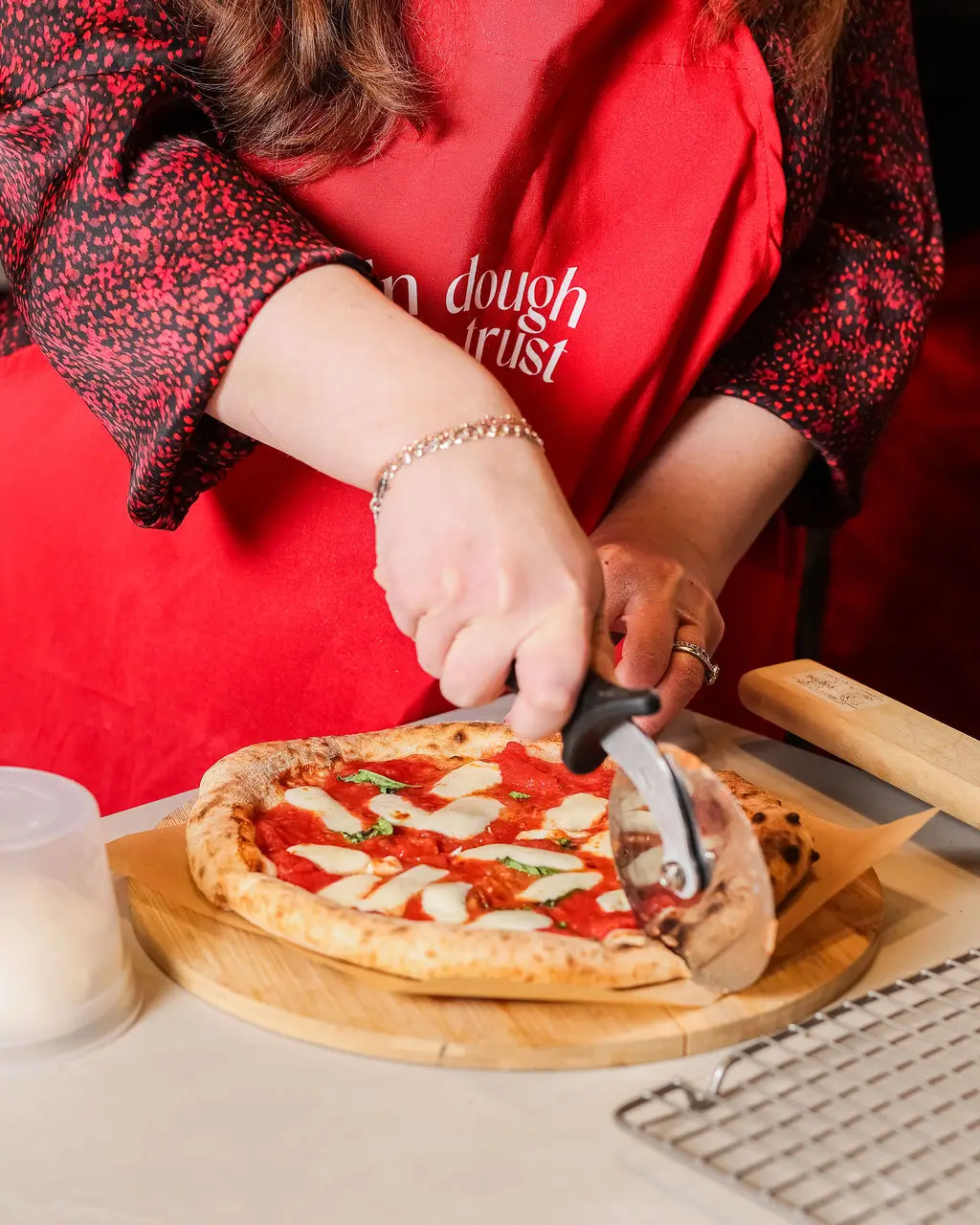
Quick answer: Neapolitan pizza is a specific style that originated in Naples, Italy. To be considered authentic (“Verace Pizza Napoletana”), it must be made with simple ingredients — type 00 or 0 flour, San Marzano or Piennolo tomatoes, fresh mozzarella — shaped entirely by hand, and cooked in a wood-fired oven at roughly 800–900°F for just 60 to 90 seconds. The result is a soft, thin center with a puffy, charred edge (the cornicione) — traditionally so tender it’s eaten with a fork and knife.
Pizza started as street food for Naples’ working poor. In the 18th century, flatbreads topped with simple ingredients — lard, cheese, herbs — were sold by vendors to the lazzari, the city’s laborers, who ate them folded into quarters (“a portafoglio”) so they could eat on the move. Tomatoes, which had arrived in Europe from the Americas in the 1500s and were long treated with suspicion, weren’t widely adopted as a topping until the early 1700s.
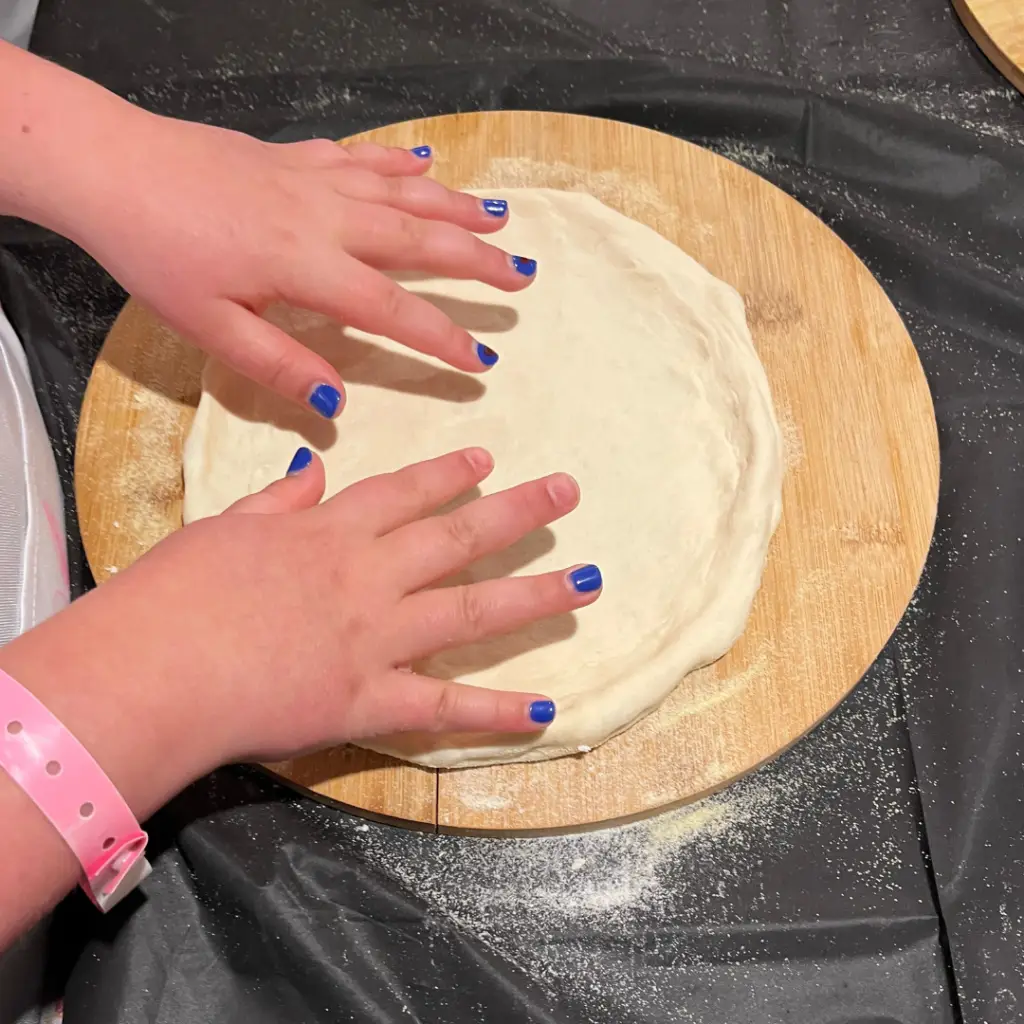
Naples’ pizzaioli kept making pizza essentially the same way for the next century. In 1984, a group of them formalized their techniques into a written rulebook, founding the Associazione Verace Pizza Napoletana (AVPN) to protect the tradition from imitation. The EU followed in 2010, granting “Pizza Napoletana” Traditional Speciality Guaranteed (TSG) status. Then, in December 2017, UNESCO added the Art of the Neapolitan Pizzaiuolo to its Representative List of the Intangible Cultural Heritage of Humanity — not the pizza itself, but the hand skill, oven work, and social ritual behind making it. It’s the only Italian culinary art on that list.
Not every round pizza with tomato and mozzarella qualifies. The AVPN certifies pizzerias and pizzaioli who follow its disciplinare — a strict production rulebook. Here’s what it actually requires:
This is also, not coincidentally, the standard Everything Dough’s Chef Ale trained to. Ale is AVPN-certified — a credential that requires demonstrating this technique hands-on, not just describing it — and was named one of PMQ Pizza Magazine’s “10 Latino Pizza Chefs to Watch” in 2025.
“Neapolitan” gets used loosely in the U.S. — often to describe any pizza with a slightly charred, puffy crust. Here’s how it actually compares to the styles most Americans know best:
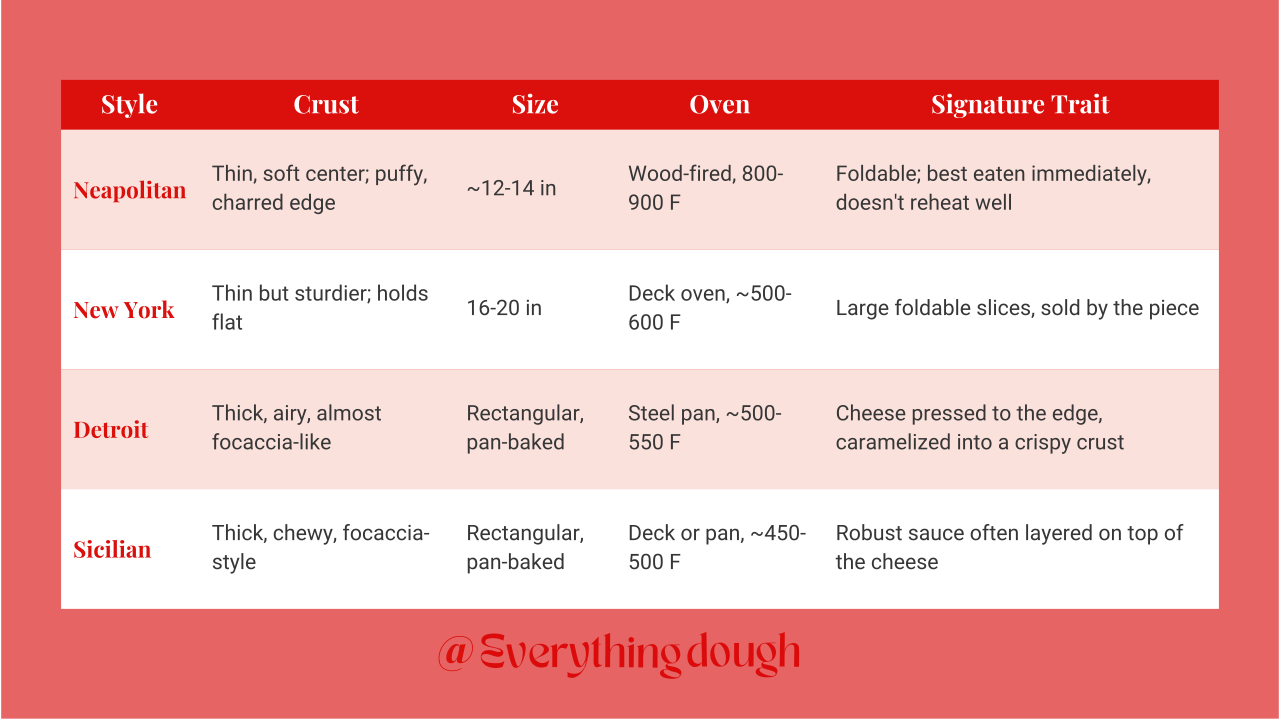
The simplest tell that a pizza isn’t truly Neapolitan: if a topping-heavy slice holds flat without drooping, or if the pie is much bigger than 14 inches, it’s already outside the AVPN rules — no matter how good it tastes.
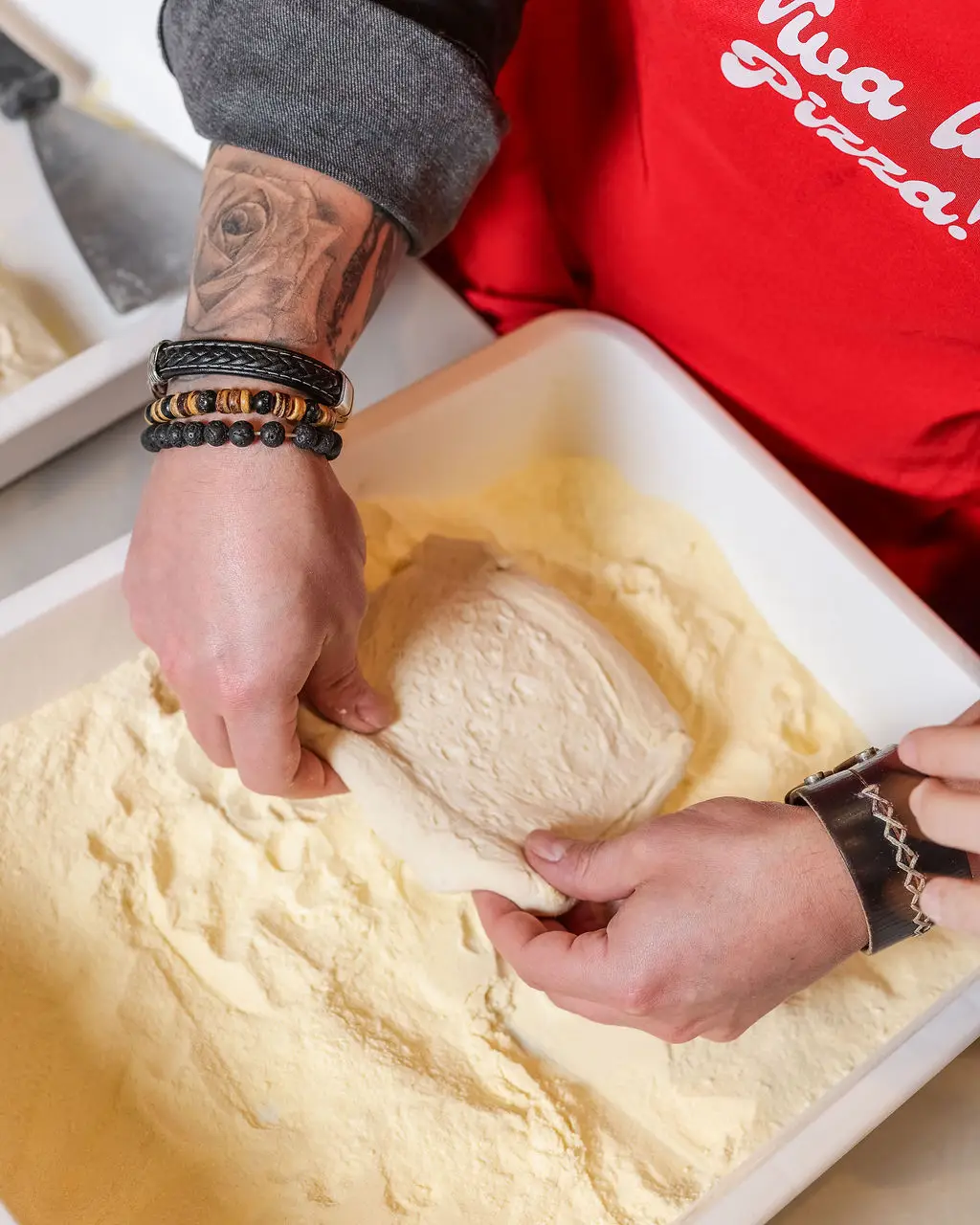
Two identical-looking doughs can bake into very different pizzas, and the difference comes down to skill most diners never see:
It’s also exactly why true Neapolitan pizza is hard to replicate at home: most home ovens top out around 500–550°F, nowhere near the heat a wood-fired oven reaches. Getting the real texture takes the right oven and the right hands — which is where a hands-on class comes in.
Everything Dough was built around that gap — most people who love Neapolitan pizza have never actually made one, because they’ve never had access to a wood-fired oven or someone trained to teach the technique.
Founded by Ale and Edgar, Everything Dough brings AVPN-trained, hands-on pizza-making to Stamford, CT and the surrounding Fairfield County and Westchester County communities: monthly public pizza classes, private classes and parties, kids’ pizza parties, bachelorette parties, corporate team-building events, cocktail and baking classes, full catering, and a pizza shop and market. Public classes and larger hosted events run in partnership with CoCreate in Stamford.
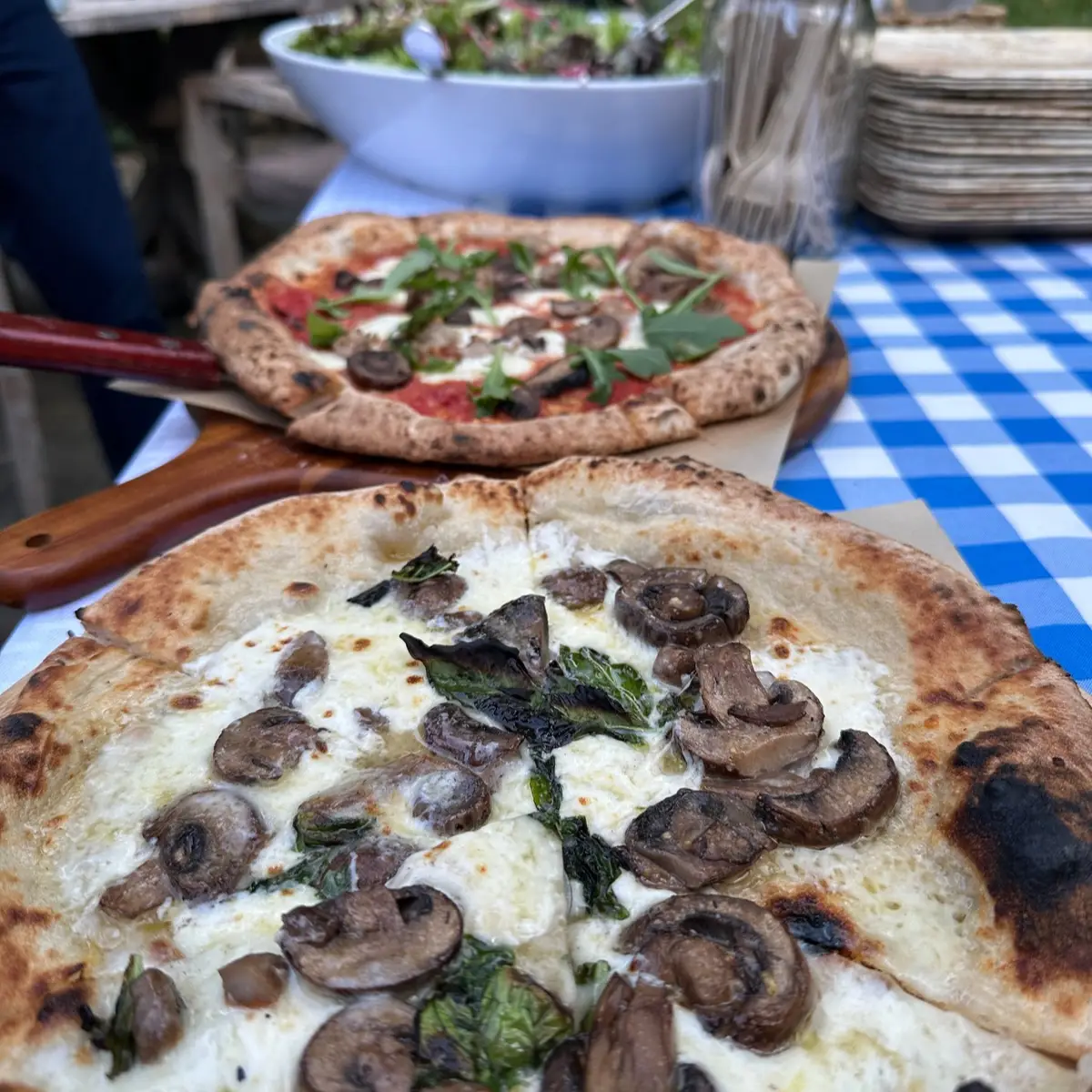
Chef Ale’s AVPN certification means the techniques taught in every class — the dough, the hand-stretch, the wood-fired bake — follow the same standard covered in this guide, not a simplified version of it.
Not exactly. The center is thin, but the edge (cornicione) is thick and puffy — the opposite of a cracker-style crust that’s uniformly thin edge to edge.
It’s intentional. The short, high-heat bake doesn’t give the center time to fully crisp the way a longer, lower-heat bake would. It’s traditionally eaten folded, with a fork and knife, or a portafoglio — not held flat like a New York slice.
You can get close, but not exact. Most home ovens max out around 500–550°F, while Neapolitan pizza is traditionally baked at 800–900°F+ in a wood-fired oven. That heat gap is the main reason a home version, however good, won’t fully match the real thing.
Just 60 to 90 seconds once the oven is properly heated — one of the most surprising facts for people trying it for the first time.
Reading about Neapolitan pizza is one thing; stretching your own dough and pulling a pie out of a wood-fired oven 90 seconds later is another. Take your time to browse upcoming monthly classes or reach out about arranging your next private event and experience AVPN-standard pizza-making firsthand — no experience required.
✦ October Pizza Month Is Here ✦ Special Deals All Month Long